AI and the Future of Photography and Videography in 2050: The Next Visual Frontier

The Visual Revolution: From Capturing Photons to Synthesizing Reality
Photography has always stood at the intersection of technological innovation and human expression. In 1839, the daguerreotype astonished the world by freezing silver halide reflections onto polished metal plates. Nearly two centuries later, digital sensors and silicon microprocessors liberated imagery from the darkroom. Yet, looking ahead toward 2050, we are on the threshold of an epochal shift that will make the analog-to-digital transition look modest by comparison.
By 2050, the concept of a “camera” as an optical box with glass lenses and mechanical shutters will have evolved into an intelligent, spatial perceptual node. Artificial Intelligence will no longer simply assist with autofocus or noise reduction; it will be the very fabric through which light, time, emotion, and dimensionality are captured and experienced.
Here is an in-depth exploration of how AI, quantum hardware, and volumetric computing will transform the photography and video production landscape over the coming three decades.
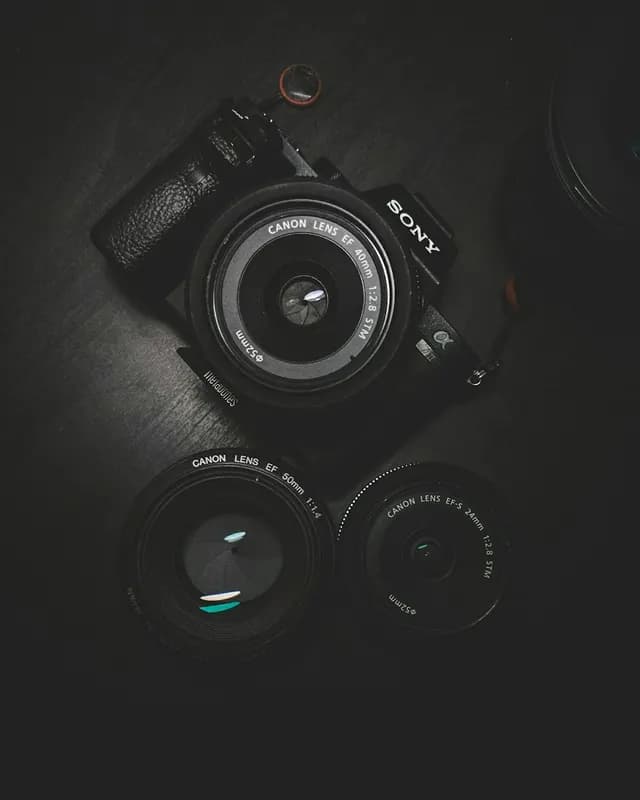
1. Quantum Metamaterial Neuro-Sensors: The End of Optical Compromise
For more than a century, photographers have been constrained by the fundamental physics of the “exposure triangle”: aperture, shutter speed, and ISO. In 2050, metamaterial flat optics and quantum neural sensors will render these classical bottlenecks obsolete:
- Continuous Dynamic Range without Clipping: Quantum single-photon avalanche sensors will record every individual photon with exact arrival timestamps and wavelengths. Blown highlights and crushed shadows will cease to exist; scenes with brutal contrasts—such as direct sunlight piercing through a dimly lit cathedral—will be recorded with infinite fidelity.
- Post-Capture Focal Planes and Variable Apertures: Flat lenses utilizing tunable metasurfaces will direct light dynamically without heavy spherical glass elements. A photographer will be able to capture a single exposure and alter the focal length from 14mm ultrawide to 200mm telephoto, or change the depth of field from f/1.2 to f/16, retrospectively with photon-level optical veracity.
- Zero Low-Light Penalty: AI neural reconstructors trained on physical light transport equations will interpolate micro-signals in near-total darkness, producing clean, color-accurate images without noise or grain artifacts.
2. 4D Volumetric Lightfields: Reliving Memories in Full Spatial Immersion
Traditional photography and videography flattened our three-dimensional world onto a 2D canvas. By 2050, the medium of memory will be 4D volumetric spatial capture, powered by real-time neural radiance fields (NeRFs) and Gaussian splatting:
- Navigable Memories: Instead of watching a wedding dance or a family reunion on a flat glass screen, viewers wearing neural-optical interfaces or standing in holographic rooms will step directly inside the scene. You will be able to walk around the couple, view the bride’s smile from your own perspective, and feel the environmental ambiance.
- Synthesized Perspectives: If a videographer stood on the left side of the aisle, neural view synthesis algorithms will interpolate and reconstruct the scene flawlessly from any vantage point in the venue, filling occlusions with sub-millimeter geometric accuracy.
- Spatial Audio Holography: Sound will be recorded as acoustic lightfields. In playback, speech and ambient whispers will be localized to each speaker’s exact spatial coordinates, shifting naturally as you turn your head.
3. Autonomous Drone Swarms & Neural Director AI
High-end film sets and wedding venues in 2050 will no longer require crane operators, dolly tracks, or multiple manual camera operators carrying heavy rigs. Instead, visual capture will be orchestrated by Autonomous Collaborative Micro-Swarms:
- Whisper-Silent Micro-Drones: Insect-sized levitating sensors equipped with ionic propulsion will glide silently through spaces, undetectable to human ears, catching intimate candid interactions from impossible angles.
- Predictive Emotional Framing: Governed by a centralized Neural Director AI, the swarm will analyze heart rates, pupil dilation, micro-expressions, and vocal inflections to anticipate dramatic climaxes seconds before they unfold—ensuring tears of joy or ecstatic embraces are never missed.
- Dynamic Intelligent Keylighting: Secondary micro-drones equipped with tunable electroluminescent panels will act as an invisible, floating lighting crew, sculpting cinematic Rembrandt or golden-hour rim light around subjects automatically.
4. Instantaneous Generative Post-Processing and Neural Relighting
Today’s post-production workflows—culling thousands of RAW files, color grading, frequency separation, and rendering timelines—will collapse into instantaneous real-time dialogue between artist and AI:
- Semantic Natural Language Grading: Creators will direct their visual tone conversationally: “Infuse this sequence with the nostalgic warmth of 1970s Kodachrome, but preserve modern skin tones and balance the background highlights with sunset specular roll-off.”
- Total Environmental Control: Unfavorable weather, harsh midday sun, or intrusive background clutter will be modulated non-destructively in real time. An overcast sky can be transformed into dusk twilight, with the AI recalculating all surface reflections, shadows, and color temperature on clothing and skin flawlessly.
- Real-Time Multilingual Dubbing & Lip Synthesis: Video productions will effortlessly translate spoken dialogue into dozens of languages, synchronizing lip movements and preserving original vocal timbres without uncanny valley artifacts.
5. The 2050 Paradox: The Authenticity Renaissance and “Proof of Humanity”
As synthetic media generation becomes indistinguishable from physical reality, the visual industry will confront a profound philosophical dilemma: If an AI can generate any image from a prompt, what makes a photograph valuable?
The answer lies in human intent, emotional truth, and biological presence:
- Cryptographic Provenance (Proof of Humanity): In 2050, every authentic image captured from physical reality will be cryptographically signed at the quantum sensor level using decentralized provenance ledgers (the evolution of standards like C2PA). Viewers will demand cryptographic certification proving that an image portrays genuine physical photons reflecting off real human beings.
- The Premium on Imperfection: Synthetic imagery often suffers from sterile, mathematically perfect symmetry. In 2050, human vulnerability, unscripted clumsiness, tears, spontaneous laughter, and natural quirks will command the highest emotional and commercial premium.
- Human Connection as the Core Service: A client will not hire a photographer or filmmaker simply to push a button; they will hire them for their empathy, their ability to comfort nervous subjects, their cultural discernment, and their curation of meaningful moments.
6. The Role of the Visual Artist in 2050: From Technician to Emotional Architect
Just as the transition from canvas painting to photography did not destroy art, the rise of AI will not extinguish the photographer or filmmaker. Instead, it will liberate them from technical drudgery:
The visual storyteller of 2050 will be an Emotional Architect. Unburdened by shutter speeds, file formats, battery limitations, or complex color correction, the artist will focus 100% of their creative energy on narrative vision, human intimacy, and philosophical depth.
Technology provides the brush and paints, but it will always be the human heart that decides where to look and what deserves to be remembered forever.






Hai sa scriem povestea evenimentului tau!